

Can the router be connected directly to the fiber?
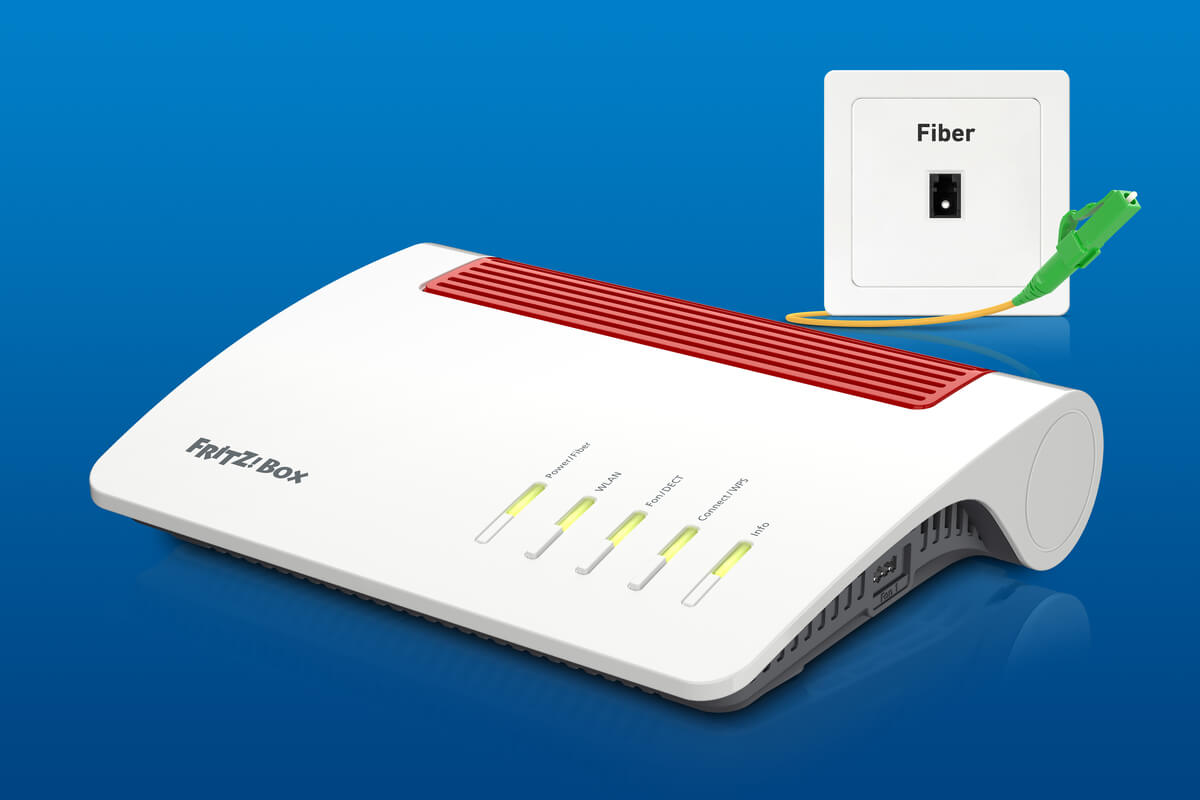
The answer to such a generally posed question should undoubtedly be: yes, of course you can. This is evidenced by the thousands of routers installed by operators in the premises of their subscribers. We guess, however, that this is not quite the situation in question. To be more specific, then, we can ask rather:
Can a subscriber to a popular fiber-optic line directly connect his router to it, other than the one provided by the operator?
And this is where things get complicated. It is impossible to give a clear answer to such a question. In fact, one would have to answer: it depends. Depends on the contract with the operator, the type of link and compatibility with it of the fiber modem built into the router, the modem authorization mechanisms on the link, etc.
How to connect fiber to your router?
First of all, you should check what type of fiber optic link you have. In most cases it will be GPON access (optical passive network - more on that in this post), but it may happen that we are an AON (active network) user.
Already knowing what kind of connection we have, we check whether our router has a suitable socket, for connecting a fiber optic cable (usually labeled "OPTICAL", "FIBER", "xPON", etc.), or not.). Some routers, such as the FRITZ!Box 5530 Fiber, or FRITZ!Box 5590 Fiber have interchangeable modules in SFP format (both are included in the kit in the case of the latter), so it is only the user's task to install the appropriate one that is compatible with their link.


SFP module socket of the FRITZ router!Box 5590 Fiber and SFP modules in AON and GPON versions
Another thing we need to pay attention to, in fact, which will remind itself when we are wondering, how to connect a router to a fiber optic cable, is a type of fiber optic connectors (more on that in this post). In most cases, we can meet with two types of them: SP (older, more popular, larger in size) and LC (newer, quite popular, smaller).

Optical connectors: (top) SC APC 8° and (bottom) LC APC 8°
SFP modules of FRITZ routers!Boxes have an LC/APC 8° socket (APC 8° means that the face of the central ferrule is polished at an 8 degree angle).


Installed SFP (GPON) module of FRITZ router!Box 5590 Fiber and compatible LC APC 8° connector
It is very important to combine tips of the same type, i.e. only LC APC 8° cable can be connected to the LC APC 8° type socket. Attempting to plug in a fiber optic cable with a connector such as PC, SPC and UPC (ground vertically) will end up damaging both the socket and the connector. Some help here will be the colors of the sockets and plugs, for example, links with polishing type APC are made in various shades of green.
If our supplier uses a different connection standard, you need to get the appropriate adapter (adapter).
Which router for fiber optics?
If you want to connect the router directly to the fiber optic cable, the device must be technically prepared to do so. Connecting a fiber optic cable to a router requires that it has the appropriate interface, consistent with the type of service, offered by the ISP (GPON / AON).
Router with fiber optic connector, especially if Internet access is to be fast (e.g., 1 Gbit/s), it must have a lot of computing power, since the device must perform a number of complex operations on the transmitted data: from encapsulation at the level of individual OSI layers of the network interface itself, to NAT address translation, firewall, encryption and even filtering the content of opened pages. Underneath our router's chassis must be a high-powered processor capable of performing all operations quickly, built into a well-thought-out and efficient platform of other chips and interfaces.
If the speed of the Internet reaches gigabits, the Ethernet switch integrated into the device must also have adequate speeds (at least 1 Gbit/s, or 1000Base-T) so that users of computers connected to it can actually see it on their screens.
Similarly, the case is with the Wi-Fi wireless interface. So that poor Wi-Fi does not become a system bottleneck, fiber optic router should be a device that supports Wi-Fi 5 (IEEE 802.11ac), and preferably Wi-Fi 6 (IEEE 802.11ax), so that the bandwidth of the radio network matches the speeds achieved in cable networks (2400 Mbit/s).
