

Comparison of protocols in Smart Home: Zigbee, Matter, Thread, DECT - similarities and differences)
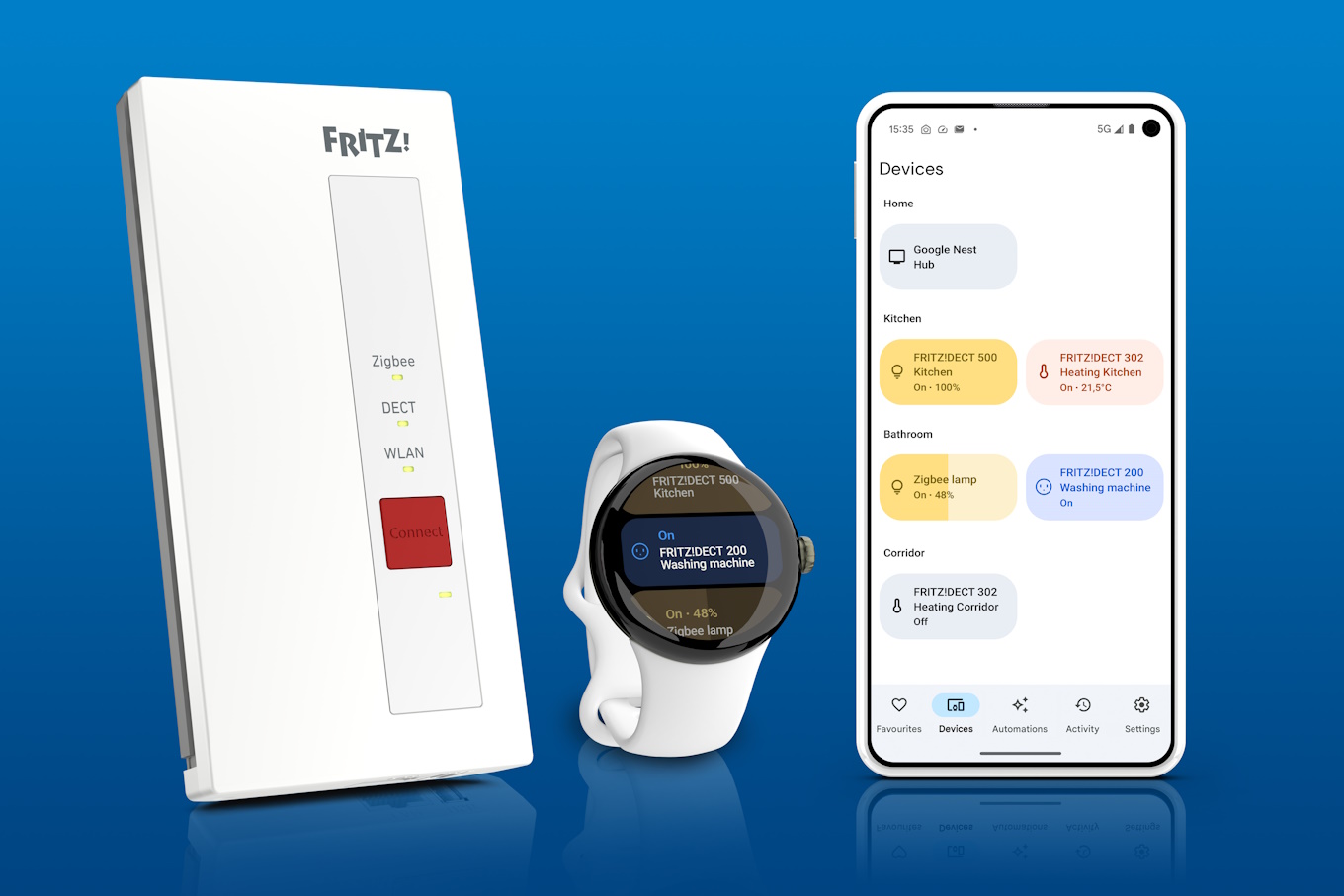
The names ZigBee protocol, Matter protocol, DECT, or Thread sound funny or scary, but they don't say much? We'll help unravel their mystery so that they become what they were made for: household aids. This is because they are the basis for many of the home automation conveniences that we collectively call Smart Home.
ZigBee vs Thread
ZigBee and Thread are wireless communication technologies that enable networking of small, low-bandwidth devices, and as such they have much in common. For example, both are based on frequencies in the 2.4 GHz range, and their basic mechanisms of operation are described in the common IEEE 802.15.4 specification. Both ZigBee and Thread devices are characterized by their small size and power requirements, so they can be built into standard-sized household devices, such as a light bulb or thermostat.
The main difference between the technologies in question is that Smart Home Thread's solutions are naturally IP-enabled - devices can be assigned IP addresses, just like on a LAN, or the Internet.
The ZigBee Smart Home system, by comparison, is airtight in this regard, and to connect it to a higher-level, IP-based infrastructure or even to the Internet, you need a suitable gateway, such as FRITZ!Smart Gateway. This, of course, makes fRITZ Smart Home devices can also communicate with ZigBee equipment and form a single, cohesive system with it.
ZigBee vs Matter
Comparing ZigBee and Matter technologies is virtually impossible from a technical standpoint, as they lie on completely different floors of a system of networked devices. While ZigBee is in the lower tiers, where radio frequencies, bandwidth, etc. are important., Matter occupies the top floors of the hierarchy and allows you to combine groups of devices into functional teams, managing their interactions.
The Smart Home Matter system relies on compatible devices, networked via IP, and "doesn't care" whether the equipment in question uses Wi-Fi, Ethernet, or Thread to do so. Based on the same principle, Matter devices can work with ZigBee-based equipment, as long as the latter, using appropriate gateways, is integrated into the IP network.
FRITZ DECT
DECT technology (DECT. Digital Enhanced Cordless Telecommunications), has been present in homes and offices since the 1990s and hasn't gotten that old at all. Its unquestionable advantages of long range and immunity to interference make it ideal for Smart Home applications, for example, and its subsequent iterations, such as CAT-iq, or ULE, enhance telephony sound quality and reduce power consumption, respectively.
The Smart Home DECT system, which AVM has been implementing in its home networking devices for many years, is based precisely on DECT technology. Thanks to the fact that the heart of the FRITZ DECT smart home system is the FRITZ Internet router!Box, airtight as it is with ZigBee, the world of DECT opens up to an ocean of IP-based applications that can be coordinated by a Matter-compliant system.
Smart home, not just convenience. Positive smart Home's impact on security is indisputable. Simulating the presence of household members by turning on and off lights or various electrical devices, such as a music player, is the simplest of functions. Similarly, the activation of the moisture detector, which can be caused by a burst pipe or a window opening during a storm, will immediately send a message to the cell phone.
Among the more complex ones, we can include combining a motion detector with turning on the lights and sending a message to the cell phone, but only when none of the household members are at home.
A smart home also takes care of the security of its owners' wallets, making a valuable contribution to saving heat and electricity, delivering it in the right amount, at the right time and to the place where it is most expected.
