

Fiber optic router - what should you know about fiber optic internet?
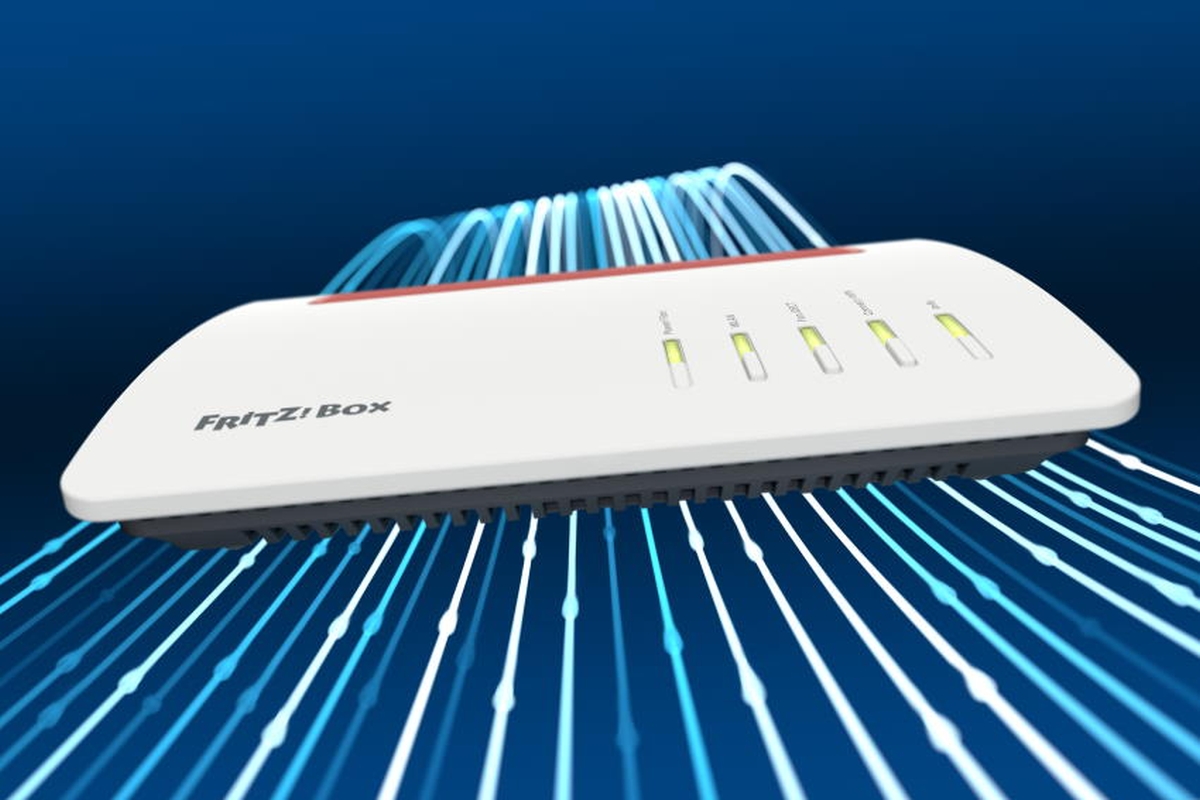
Fiber optic link is currently the fastest and most stable medium for transferring large amounts of data. Developments in technology and the greater availability of inexpensive materials have meant that today high-speed fiber-optic links with speeds as high as 1 Gbit/s are being installed in homes and businesses. For such efficient Internet, you need the right router.
What is optical fiber?
Fiber optics is a flexible glass fiber in a suitable sheath, inside of which, by means of a beam of light, emitted by a laser or LED, coded information is transmitted. Fiber-optic transmission is characterized by high bandwidths (commercially offered links from a few hundred Mbit/s to 10 and more Gbit/s), resistance to electromagnetic interference and surges, and low intrinsic attenuation of the medium (the signal does not significantly deteriorate as the length of the cable increases).
Which router for fiber optics
Fiber optic router must be characterized by relatively high computing power, as the increase in the speed of the Internet interface makes the amount of data on which the device must perform a series of complex operations grow proportionally. The use of an older router that, for example, only has a 100Mbit/s switch to support a 1 Gbit/s link will result in a bottleneck in the system and, with testing, will never achieve satisfactory results.
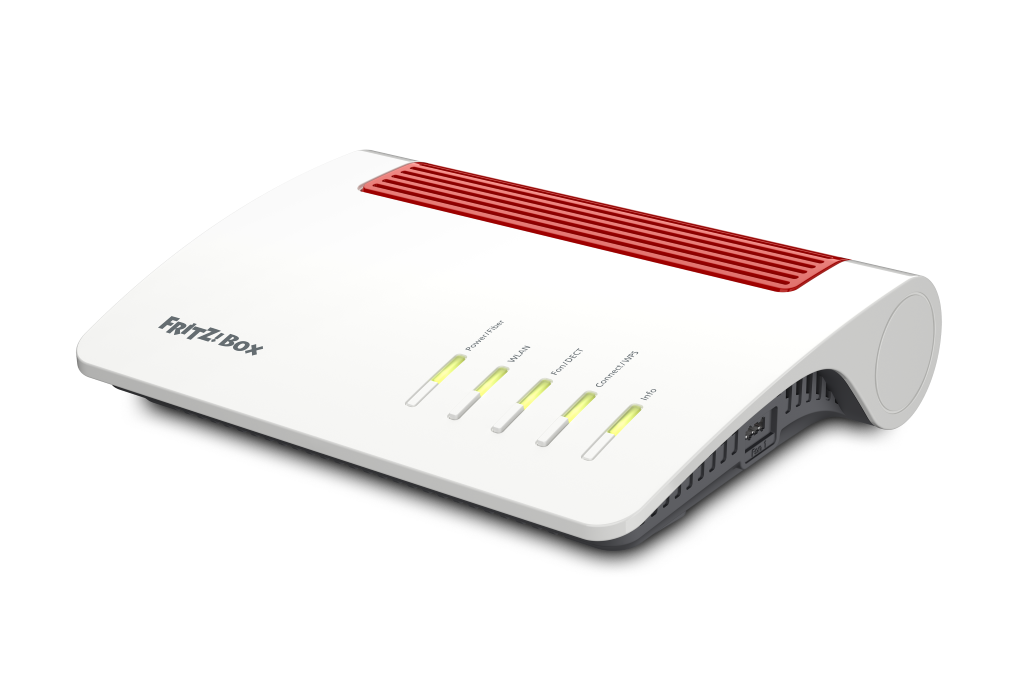
A fiber optic Internet access router can be (in simple terms) connected to a cable in two ways: directly to a fiber optic bundle or via an external modem.
In the first case, our router must have a suitable fiber modem built-in, adapted to the parameters of the operator's network. To be sure that our router will be compatible with the ISP's infrastructure, it is best to conduct the appropriate tests beforehand by contacting the operator.
In the second scenario, we get an external modem from the ISP into which a fiber-optic cable is plugged, which in turn connects to our router via an Ethernet cable (preferably fast 1 - 2.5 Gbit/s). In such an arrangement, we can easily connect basically any model of FRITZ router to the fiber link!Box. However, versions with a separate, dedicated high-bandwidth WAN port will do particularly well here, pow. 1 Gbit/s.
With the growing popularity of Wi-Fi, we must require a fiber router to have a fast enough wireless interface. One should immediately turn to the FRITZ models!Box, supporting at least Wi-Fi 5 (IEEE 802.11ac), reaching up to 1733 Mbit/s in the 5 GHz band and 800 Mbit/s in the 2.4 GHz band. However, it's best to equip yourself with a Wi-Fi 6 (IEEE 802.11ax)-enabled device, which offers speeds of up to 2,400 Mbit/s in the 5 GHz band and 1,200 Mbit/s in the 2.4 GHz band, with the standard performing much better in a radio environment where other radio networks are present, optimizing transmission individually for each end device.
