

Fiber optics - advantages of connecting router with built-in ONT vs installing ONT (modem bridge) + router)
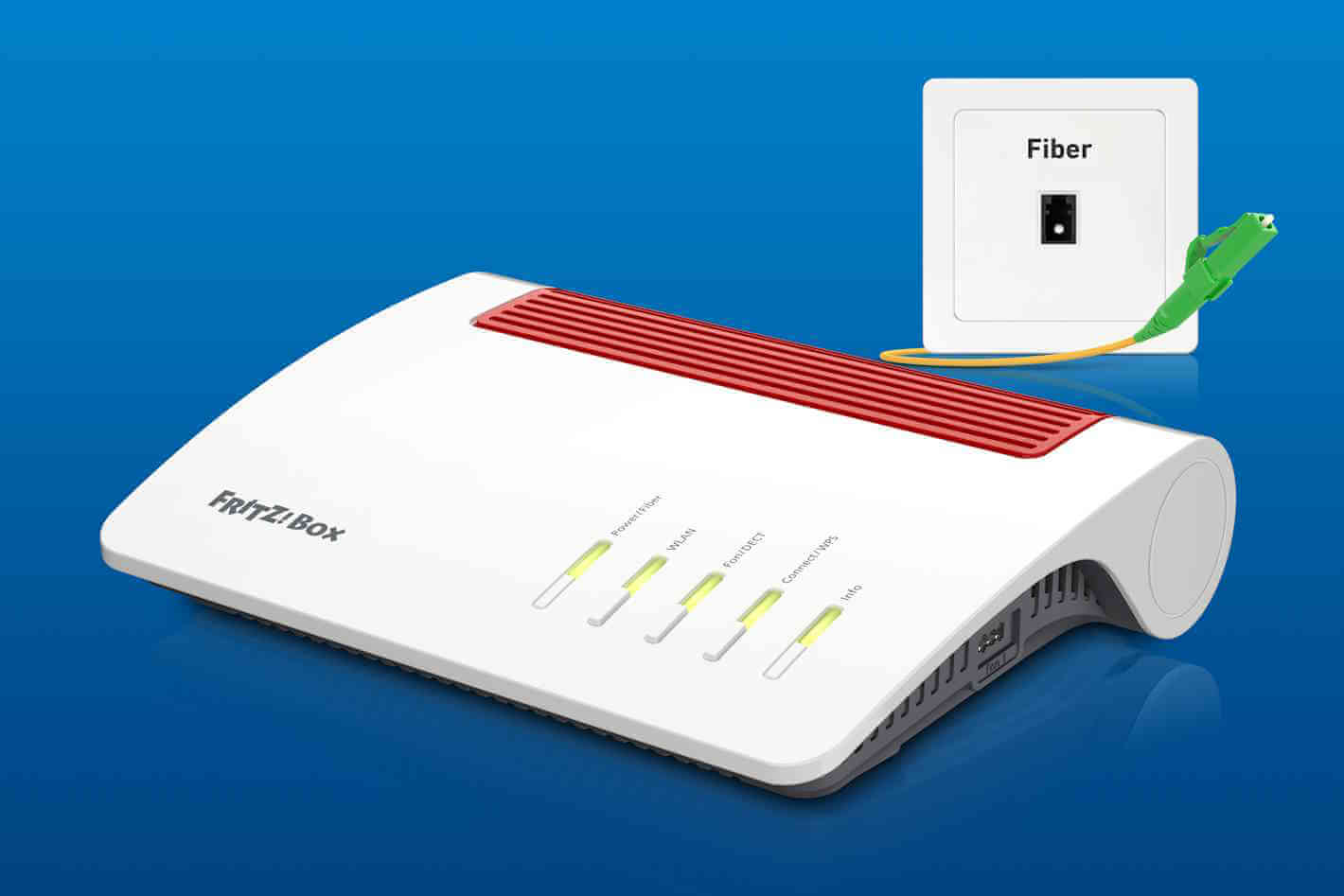
Fiber optics are getting under the roof, and literally so. While until recently you could count on a high-speed optical connection only in a block of flats on a housing estate, today it is profitable for operators to provide fiber-optic Internet even to single-family houses. As a rule, operators provide their own "optical modem" along with the link, but it is worth considering using your own advanced fiber router.
What is ONT
ONT (English. Optical Network Terminal) is just an "optical modem", a kind of media converter that converts the light pulses sent through a fiber optic cable, into an Ethernet signal, forwarded on to a home router or computer. In its simplest form, the external ONT takes the form of a small plastic box with a power supply into which a fiber optic cable is inserted, having an Ethernet socket on the other side.
What is the role of optical network terminal in fiber optic networks
In addition to the aforementioned basic functions of "translating" the optical signal into an Ethernet signal, the ONT modem can and even must perform certain network functions, for example, support DHCP, in order to receive from the operator an IP address for the Ethernet interface, or PPPoE, in order to thus obtain the connection and parameters for Internet access. Sometimes a fiber modem has so many network functions that it can be mistaken for a less sophisticated router.
Router with built-in ONT vs external optical modem - what to choose for your network
The answer to the question of whether, in my case, a router with an ONT or an external optical terminal would be a better solution requires further consideration and discernment of formal and technical conditions.
First of all, currently in our country if you want to connect your own ONT optical terminal, not provided by the operator, to the fiber optic network, you may collide with the restrictions of the terms of service, where sometimes such a possibility is directly prohibited. Operators simplify their lives this way, as they then do not have to deal with possible problems and the need to diagnose them.
Even if the regulations do not explicitly exclude the use of our own ONT, we may in turn encounter technical problems and lack of appropriate configuration data. It is also necessary to foresee the place where we would like to put our GPON router and ask the operator to lead the optical cable there, as doing it on our own may prove to be more difficult than laying the Ethernet cable and require having specialized tools.
If we deal with the initial formal and technical problems, the modem from ONT, fRITZBox GPON router, or even the fastest xGS-PON router reaching speeds of 10 Gbit/s connects and configures quite easily and is basically a one-time effort, as optical links are usually very stable.
Connecting your own router directly to the fiber is worth considering for at least two reasons: fewer cables and external devices, and the expected feature palette.
The use of an external modem, as you can easily imagine, complicates the installation somewhat, as there is an additional box, power supply and network cable, resulting in a small but nevertheless additional and altogether unnecessary consumption of electricity, plus the need to deal with unruly wiring.
The modems, or even routers with built-in optical modems, supplied by operators are usually budget devices, performing the basic functions of link sharing via cable ethernet or Wi-Fi.
Users with more sophisticated needs, expecting from their router, for example, high-speed Mesh Wi-Fi, built-in NAS/uPnP media server, VPN support for remote connection to the home network, or even connecting remote locations, the ability to implement Smart Home functions, should definitely get a FRITZ router!Box 5590 or 5530 Fiber.
