

ONT, ONU, OLT, AON, ONT, XGSPON ... - We explain frequently used abbreviations in the world of fiber optic links?
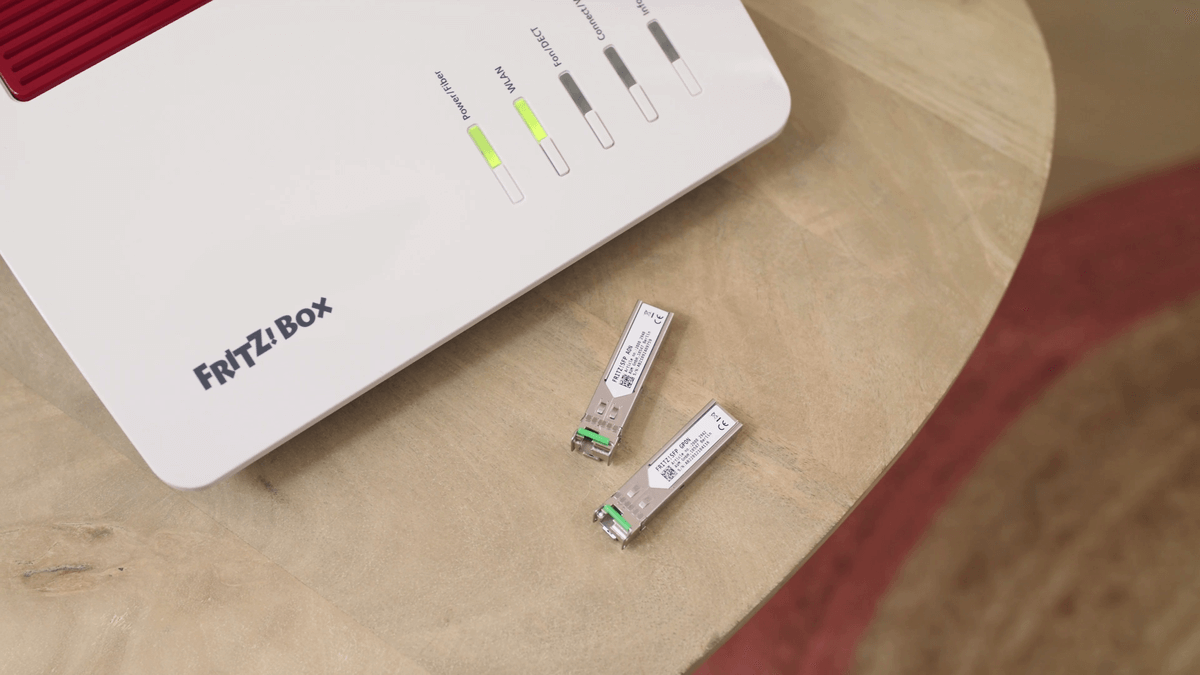
Fiber-optic Internet is becoming more and more common in our country. The availability of services is increasing as the network expands, and prices are unaffordable. Wherever possible, therefore, it is worth seriously considering a switch to a fiber-optic link, as it is technologically superior to other access technologies, some of which (such as xDSL, are already reaching the end of their capacity in terms of achievable throughput).
As with any technology, the world of fiber optics has a specific jargon, often consisting of acronyms and borrowings from the English language. In this material we will try to introduce the most important concepts and thus, on this occasion, explain how a fiber optic network is built and how this modern ICT medium works.
FTTP Fiber To The Premises / FTTH Fiber To The Home
The two synonymous terms mean a fiber optic network brought to the customer's premises (premises), which is often the customer's home (home). The terms signify a certain policy of providers and a vision of the structure of their networks, envisaging the use of a high-speed and non-interference-prone medium not only for connecting data centers, realizing long-distance and international links, but also applying it to the section of the so-called "last mile", i.e. from the operator's headquarters, to the customer's premises itself. In an ideal situation, it is thus theoretically possible that the file we download from the Internet will be transmitted quickly and efficiently via fiber optics along the entire route of its journey: from the server on which it is stored, through the various nodes of the network, to the terminal (ONT) to which it is attached fiber optic router (or with which it is integrated) in our apartment.
GPON (Gigabit Passive Optical Network)
Passive optical network. In general, we can distinguish two types of optical networks: passive and active. "Passivity" consists, in simple terms, in the fact that all devices, involved in communication on the section from the subscriber's headquarters (that is, from the OLT), up to the terminal (ONT/ONU) at the customer's site are not electrically powered and their role is only to transmit the stream of light pulses further, without performing any operations on it. In the context of standard end-customer Internet connections, passive networks are far more common, as they are much cheaper to build and operate, which is probably where their popularity comes from. If the fiber itself is of adequate quality, and all connections are made carefully and properly secured, such a passive network section can be as long as 60 km, without loss of signal quality! In practice, however, due to the use of branching topology with splitters and restrictions on network span, the distance of a subscriber from the PBX is usually limited to 20 km.
GPON network transmission speed (according to the international standard ITU-T G.984.(x) are 2488 Mbps (in the "down" direction, i.e. OLT at the operator's headquarters to ONT at the customer's) and 1244 Mbps ("up", in the opposite direction, from ONT to OLT).
GPON networks use single-mode optical fibers, which means that a single beam of laser light is transmitted in a single optical fiber. In order for bidirectional communication to take place simultaneously in this single fiber, a wavelength-division multiplexing (WDM) technique is used. This means that "up" and "down" transmission are encoded with light of different wavelengths (1310 nm and 1490 nm, respectively).
AON Active Optical Network
Unlike a passive network, an active optical network uses active transmission devices (routers, switches, multiplexers) in its topology, which perform various operations on the transmitted signal and therefore must be separately powered. Since the processed signal is also amplified at such active network nodes, the range of such a network can be greater than that of the passive version.
10G GPON / XGSPON / NG PON 2
10G GPON is a new passive optical network standard, offering higher bandwidths of as much as 10 GBit/s "down" and up to 2.5 GBit/s "up", and in the case of XGSPON / NG PON 2 up to 10 GBit/s in both directions. The new standards are based on the same fiber optics as GPON, so switching to the new technology only requires changing the OLT on the operator side and the ONT on the user side.
OLT Optical Line Terminal
An OLT is a device on the operator's side (located in the provider's PBX or telecommunications closet in an elevated location, such as a housing development), where the fiber optic cable "begins", leading to the subscriber's premises. OLT is equipped with a number of ports (usually dozens) into which fiber optic cables are plugged. A single fiber of optical fiber used to transmit data can go to a single recipient, but more often it is branched with splitters into a tree structure.
ONT Optical Network Terminal / ONU Optical Network Unit
An ONT is a user-side line termination equipped with a fiber optic socket on one side and, for example, a gigabit Ethernet port on the other. The ONT can also take the form of an elaborate solution in the form of an entire router that has a fiber optic connector (e.g. FRITZ!Box 5530 Fiber), but also high-speed Wi-Fi, Ethernet switch and many other features.
Currently, for most operators in Poland, the ONT is provided to the subscriber by the operator as part of the installation package.
Splitter
Fiber optics is a medium so flexible that up to 64 recipients can use a single fiber simultaneously. The fiber optic connector at the operator's OLT can be connected to a single fiber, brought, for example, to an apartment block and branched there to 64 apartments. In practice, such a heavily branched topology is not used, since in such a case 64 users would have to share the maximum bandwidth of this one fiber, i.e. 2488 Mbit/s "down" and 1244 Mbit/s "up", which would mean that if each neighbor started downloading a file from the Internet at the same time, there would be "only" 38.87 Mbit/s and correspondingly less (19.44 Mbit/s) when transmitting in the opposite direction.
The splitter is a passive device that contains a prism and has one socket for optical fiber input and splitting one laser beam into two (or more) identical beams, directed to separate outputs. Naturally, the output rays have less brightness, but it is sufficient for flawless data transmission.
It is easy to guess that in such a case, all users, using such branched fiber-optic lines, simultaneously receive the same stream of information. To ensure that the relevant data goes only to the appropriate ONT of the subscriber in question, data encryption is used (AES algorithm with 128-bit encryption).
"Upward" communication in a branching topology is implemented in a different way. Time-division multiplexing (TDMA) is used, which means that individual ONTs do not transmit simultaneously, but each is given its own "time slot," i.e., a fixed period of time during which it can transmit data. After sending a certain portion of them, it gives way to the next ONT and waits its turn to continue the transmission.
