

Smart Home protocols Zigbee, Matter, Thread, DECT
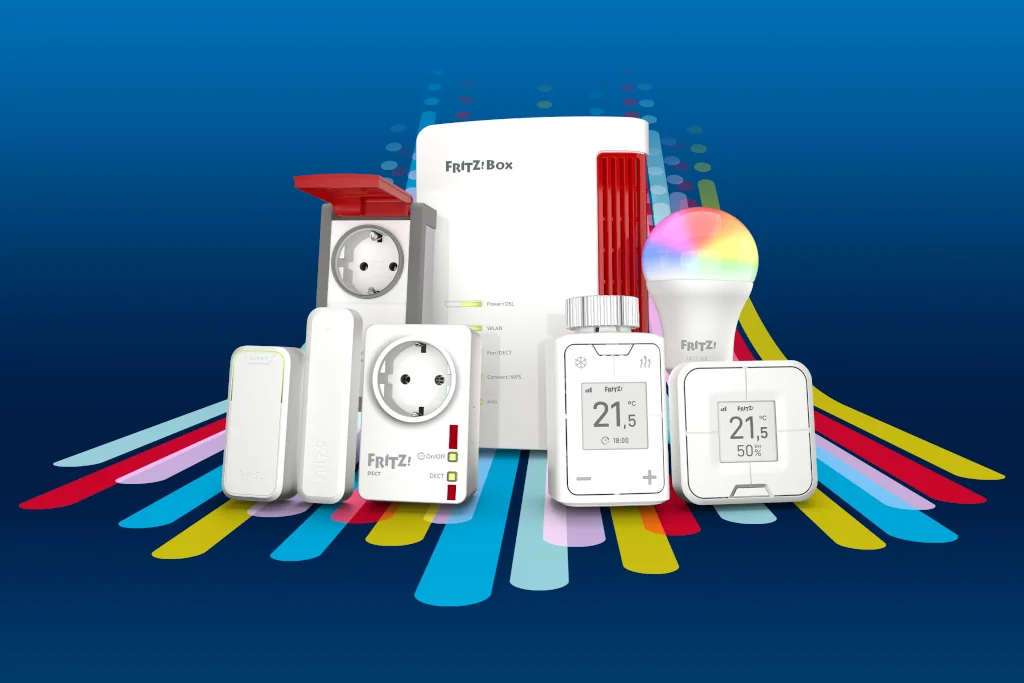
The world of Smart Home solutions is experiencing growth, so it's no surprise that new languages, or protocols for communication between devices, are emerging. Among the most well-known and well established already on the market are ZigBee and DECT, but matter and thread are also gaining popularity. We will explain what they are and how to use them.
Zigbee
ZigBee protocol has been used for almost 20 years, mainly in industrial and professional applications (reading data from meters, controlling devices). ZigBee devices provide communication over short distances (10 - 100 m), and are characterized by low power consumption, but also by relatively low transfers (up to 250 kbit/s), but sufficient for the applications intended for them; the radio modules themselves are miniature. The advantage of this protocol was the use of less occupied frequencies below 1 GHz, but this raised problems with the availability of this band in different countries. Currently, ZigBee smart home solutions operate in the 2.4 GHz range, the same range that Wi-Fi uses, with all the resulting advantages and disadvantages, which include, on the one hand, the possibility of worldwide use and, on the other hand, susceptibility to interference from other networks.
DECT
DECT is perhaps the oldest digital wireless communication protocol in widespread use, as its origins date back to 1987. The technology was intended to provide access to telephony in homes and offices, providing from the beginning the ability to simultaneously log several devices into a single base station. Using the 1.9 GHz band, the Smart Home DECT system has better radio wave penetration through obstacles, resulting in a range of up to 200 meters and immunity to interference from Wi-Fi networks. DECT technology continues to be developed and improved. NG-DECT/CAT-iq compliant telephony devices, such as FRITZ handsets, for example!Fon, support HD voice calls and a range of additional services. A DECT ULE development has also been developed, specifically for energy-efficient Smart Home and IoT solutions.
Because FRITZ devices!Boxes from the beginning of their existence on the market had a built-in DECT base to support wireless telephony, the use of this standard for the implementation of Smart Home functions was quite natural. A whole family of home automation devices is based on this very protocol: dECT thermostat FRITZ!DECT 301/302, FRITZ smart light source!DECT 500, FRITZ controllable outlet!DECT 200/210 and a range of accessories for easy expansion and system management, such as FRITZ!DECT Repeater 100, range extending, configurable FRITZ button!DECT 440, or FRITZ magnetic reed switch!DECT 350, signaling the opening of doors or windows. Of particular note is zigBee gateway FRITZ!Smart Gateway, thanks to which you can also log into the Smart Home system, based on DECT, devices using ZigBee technology.
Matter
The matter protocol is relatively new, as it is being introduced from 2019. the idea of integrating different, previously incompatible Samrt Home and IoT systems based on IP. It can be likened to Esperanto - a common language of communication for all. However, while Esperanto is not wildly popular around the world, the matter is likely to catch on, as the Smart Home matter system is being developed and supported by giants such as Google, Apple, Amazon, Samsung, as well as the ZigBee Alliance, IKEA, Huawei and Schneider while remaining in the "open source" domain. The matter platform is implemented in the Smart Home system based on FRITZ solutions!, and so the matter devices will be able to be easily integrated into the existing system, based on the FRITZ router!Box.
Thread
Thread, is a created since 2014. the prototype of the matter system, which aimed at easier integration of Smart Home and IoT devices. Smart Home thread system is based on 6LoWPAN protocol (IPv6 over Low-Power Wireless Personal Area Networks - IP6 communication over low-power wireless personal area networks).
